TWAIN Direct Certification Program
The Standard for Trust, Compatibility, and Market Advantage
The TWAIN Certification Program provides the industry’s only independent, third-party validation for products built on both the time-tested TWAIN Classic (up to v2.5) and the modern TWAIN Direct standards. Certification ensures your solution isn’t just compliant—it’s secure, interoperable, and optimized for both legacy environments and today’s cloud-driven workflows.
Whether you are an OEM, ISV, or Enterprise IT leader, certification helps you streamline development, slash support costs, and future-proof your technology investment.
Why Certification Matters
-
Build Trust Instantly – Demonstrate an unwavering commitment to security, reliability, and global open standards.
-
Accelerate Adoption – Certified solutions integrate seamlessly across desktop and cloud, reducing the "technology burden" on your customers.
-
Become the Gold Standard – Stand out in a crowded market with a recognized seal of approval backed by rigorous independent testing.
Who Benefits?
-
OEMs: Make hardware cloud-ready with TWAIN Direct while maintaining rock-solid Classic 2.5 stability; lower support overhead by eliminating driver friction.
-
ISVs: Ensure universal compatibility with a massive install base of certified devices and unlock a broader addressable market.
-
Enterprises: Guarantee seamless interoperability across mixed environments while protecting network security and data integrity.
How It Works
We’ve designed our program with tiered levels to match your product’s specific requirements:
-
Self-Service Automated Testing: Run quick, efficient checks with our automated tools to confirm compliance for TWAIN Classic or Direct and identify potential security gaps early in the dev cycle.
-
Advanced Certification: Receive thorough, expert validation for custom features, complex driver implementations, and advanced cloud capabilities.
-
Expert Professional Services: Work directly with TWAIN specialists for hands-on support, deep-dive troubleshooting, and architectural guidance for multi-standard integration.
Let's Talk!
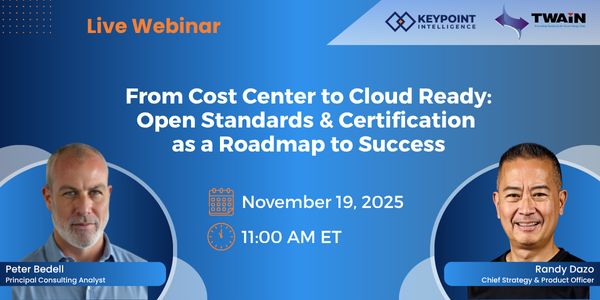
Set the Standard for Cloud-Ready, Secure Interoperability
Join Keypoint Intelligence for a fast-paced webinar on the new TWAIN Direct Certification Program—your path to faster innovation and market growth.

(2).jpg "TWAIN Whitepaper Banner(1)(2)")