

AI Solutions
AI-Powered Business Execution Platform
You may not have to pull that yellow tab much longer
Sign up for The Key Point of View, our weekly newsletter of blogs, podcasts, and videos!
For a long time, artificial intelligence (AI) lived in places most people couldn’t see. It filtered spam, flagged fraud, and powered recommendation engines, but was largely invisible—quietly working behind login screens and security layers. If you weren’t in cybersecurity, data science, or IT, you could go about your day without ever thinking about it. But now, that boundary is gone.
AI is no longer confined to digital systems or abstract workflows. It’s moving into physical environments, embedding itself into real-world experiences in ways that feel almost incidental. Case in point: your next ride at Walt Disney World.
Arms Up, Enjoy Your Ride
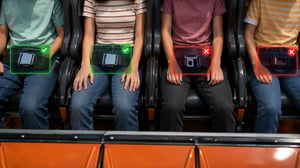
Usually, you load into your ride vehicle and if the safety restraint is a seatbelt (e.g., Tower of Terror, Rise of the Resistance, Test Track), you buckle it in, and lift your arms as a cast member comes around and instructs you to pull on the yellow tab attached to the buckle, ensuring it’s fully in the locking mechanism (and that you’re not holding it in place). The ride systems are also equipped with second layer: a detection screen telling the employee which seat is not buckled. This is very visible in rides like Star Tours (which is the only reason I know it exists).
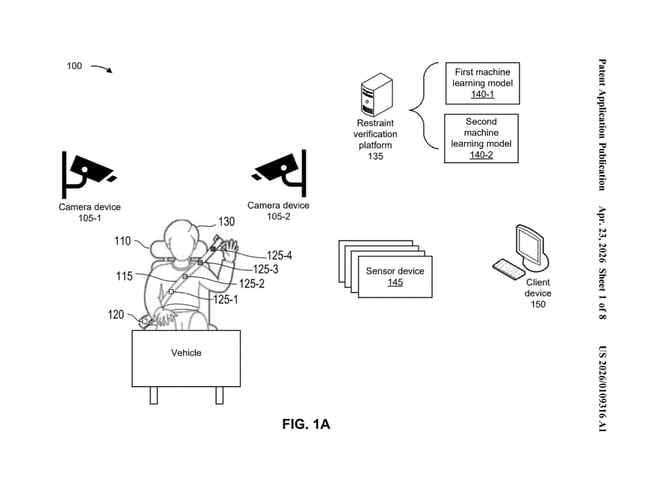
But now, that may be changing. Disney recently filed a patent for a system that uses cameras and machine learning (ML) to verify whether ride restraints are properly secured before dispatch. On paper, that sounds straightforward. In practice, it’s a meaningful shift in how AI is being applied.
Source: Disney Food Blog (www.disneyfoodblog.com)
Instead of analyzing network traffic or detecting anomalies in financial systems, this technology watches physical movement. It evaluates how a person is sitting, how a restraint is positioned, and whether everything is locked correctly. The system continuously captures video of each seat during the loading process and runs it through trained models that assess body position, restraint type, and proper engagement. If something looks off, the solution flags it. If everything checks out, the ride moves and guests may never notice it happening.
We tend to talk about AI in big, visible terms: chatbots replacing customer service, generative tools writing content, autonomous vehicles navigating city streets, etc. But this Disney example points to something quieter. AI is not just generating content, but it is recognizing patterns, making rapid decisions, and operating at a scale that humans simply cannot match.
AI Is Becoming Infrastructure
Ride loading is a perfect example of the process of AI becoming something embedded into the operational fabric that makes systems faster, more consistent, and arguably more reliable. But this isn’t about replacing the operators; this is more for the smooth process of it all, how to get load times down and efficiency up. With AI/ML scanning every seat simultaneously and flagging only what needs attention (augmenting processes that already exist) AI simply tightens the margin for error.
Have you ever stood in a 75+ minute line in 90-degree heat? Even small delays in ride loading can compound quickly. A ride that loads 800 guests an hour always has a significantly long wait time when compared to rides who can load more, so a few extra seconds per cycle can ripple into longer wait times across the entire park. Multiply that across dozens of attractions and thousands of guests and the impact becomes significant.
AI offers a way to streamline that process without removing safety checks. It compresses decision-making into milliseconds. Less waiting, more throughput, and same (or improved) safety standards. That’s a compelling tradeoff for an industry built on managing crowd flow. Disney isn’t alone in this direction; it’s just one of the more visible examples. We’re starting to see AI move into environments where physical outcomes matter just as much as digital ones. Manufacturing floors, healthcare diagnostics, transportation systems, retail spaces, and now theme parks.
What makes this shift notable is how normalized it feels. There’s no dramatic reveal and no announcement calling attention to the technology. It is just a slightly smoother experience that most people won’t question or be up in arms (pun intended) about.
Keypoint Intelligence Opinion
When AI moves into physical systems, the stakes change in a very real way. It’s no longer just about protecting data. It’s about safeguarding processes that have tangible consequences from movement and safety checks to the overall flow of operations.
That shift brings a new set of considerations. Data integrity becomes even more critical; model reliability carries greater weight; and the attack surface expands beyond traditional servers to include sensors, cameras, and embedded systems.
At the same time, AI is no longer confined to digital tasks like writing e-mails or generating images. It’s quietly checking seat belts, monitoring environments, and optimizing systems we interact with every day, often without realizing it. There’s nothing flashy about this evolution, and that’s part of the point. It isn’t meant to draw attention, it’s just meant to help.
So, next time you’re waiting for a ride in a theme park and the line is moving a little quicker than normal, maybe AI is to thank for it.
Stay ahead in the ever-evolving print industry by browsing our Report Store for the latest insights. Log in to the InfoCenter to view research and studies through our Workplace- and Production-based Advisory Services. Not a subscriber? Contact us for more information.