

AI Solutions
AI-Powered Business Execution Platform

Sweden leads the move to textbook learning, handwriting, and phone-free classrooms
Sign up for The Key Point of View, our weekly newsletter of blogs, podcasts, and videos!
Sweden, once a bulwark of digital learning and EdTech in the classroom, has recalibrated its policy and put the focus back on textbook learning, handwriting, and no phones in the classroom. Schools across the country are returning to more traditional learning methods, such as reading from physical books and print-out sheets, learning cursive handwriting, and the promotion of reading for pleasure.

Read My Lips: No New…EdTech?
Why the change in direction? Educators in Sweden have been warning of declining literacy standards, comprehension abilities, information retention, and attention deficits for the last ten years. As iPad and laptop use became mainstream across all age groups, scores for reading and comprehension in studies such as the Progress in International Reading Literacy study steadily declined, particularly between 2016-2021 when the digital education policy was at its zenith.
Educators and policy makers have, therefore, felt the need to act and return to learning methods that establish a solid foundation on which to build skill development and knowledge retention. Welcomed by parents and students, Sweden’s government is keen to emphasize that this is not a move to ban technology, but a move to prioritize cognition above all else.
The move marks a swing away from consistent policy regarding digital learning and EdTech investment that dominated the 2000s and 2010s, with $200 million being invested in purchasing textbooks and restocking libraries in schools. Younger years, in particular, are being affected by this policy change with most of the teaching and learning for small children taking place away from screens and via physical materials. Some screen use is being encouraged for older children, but previously digital-heavy subjects, such as maths, are now taught exclusively from textbooks.
Back to Basics
Studies across the globe have long tried to link the focus on learning via digital means to a deficit in cognition and information retention. For Sweden, the policy of total digital learning for all ages has been caught out by the science behind learning and retention. Educators have found that fine motor skills, often honed whilst learning to write and through continued practice, are much weaker than they should be in children of all ages.
As has been mentioned, studies such as Progress in International Reading Literacy and Program for International Students (PISA) have noted a decline in Swedish children’s comprehension and retention skills for reading, maths, science, and literacy, but also several other issues. These include concentration issues, equity gaps in learning, and a reduced teacher-student interaction which, therefore, reduces opportunity for help and early intervention.
Recent analysis indicates that the correlation between digital learning and issues with comprehension can be summed up by three reasons:
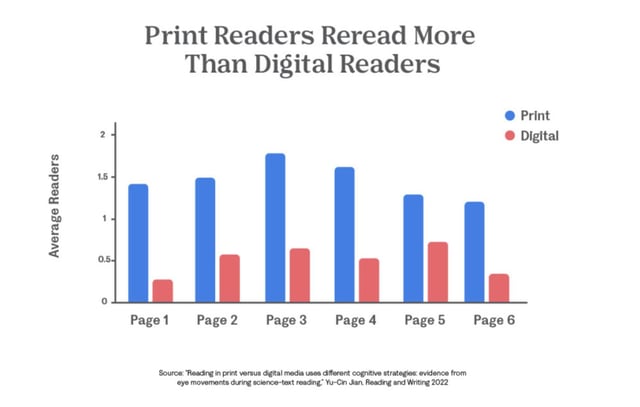
Sweden’s move away from digital learning, therefore, is not a political gambit designed to appeal to a reactionary group in society. It is a necessary policy change to ensure that young people can build a stable foundation of learning on which other skills, digital among them, can flourish later.
Where That Leaves the Conversation
Sweden’s move away from total digital learning to utilizing physical resources and emphasizing the importance of mastering basic cognition and fine motor skills is a result of an “all-in” policy that failed to yield positive results. It is important, however, to consider it in the context of wider conversations and trends taking place across education globally regarding the effect of digital learning and screens in the classroom on learners. The Western European EdTech market is currently experiencing a “rethink” away from the rapid digitization of the pandemic era towards long-term, quality solutions that provide institutions with a return on investment (ROI).
Despite an investment slump in 2024, global investment in EdTech surged last year, reaffirming a commitment to digital learning and solutions that provide quality support for teachers and learners. Regardless of this financial commitment, the discourse calling for more “digital balance” in the classroom is growing louder and louder. In the UK, for example, the government is implementing a nationwide ban of mobile phones in schools. Campaigns for Safe Screens and better regulated EdTech implementation and use are also growing in momentum. Ensuring that technology is being used to assist teaching and learning, rather than dictate it, is becoming a critical focus.
Whilst there is a concern that cutting back on learning digital skills from an early age may impact future job prospects (Sweden is a leading player in tech entrepreneurship and Europe’s leader in producing “tech unicorns”), the argument of needing strong comprehension, critical thinking, and fine motor skills from the outset seems to win out here. With the pace of technological change growing ever faster, being able to comprehend information, retain it, and pass a critical judgement over its credibility will become even more important as time goes on.
Stay ahead in the ever-evolving print industry by browsing our Report Store for the latest insights. Log in to the InfoCenter to view related research through our Customer Communications Experience Advisory Service. Not a subscriber? Contact us for more information.