

AI Solutions
AI-Powered Business Execution Platform

Recycling shapes sustainable workplace technology strategies
Check out Keypoint Intelligence’s Sustainability page!
As Global Recycling Day approaches, sustainability is once again top of mind for businesses and technology providers alike. But recent research from Keypoint Intelligence suggests that recycling is no longer just a symbolic sustainability gesture: It is becoming an operational expectation for organizations managing their workplace technology environments.
According to the Western European Sustainability & Brand Perceptions study, nearly half of businesses say they would be interested in printer and copier vendors that offer cartridge and toner collection and recycling services. This strong interest highlights a clear shift in how organizations approach sustainability in the workplace. Companies are no longer simply asking vendors to talk about sustainability—rather, they want practical solutions to help them reduce waste and manage environmental impact in tangible ways.
You might ask, don’t all vendors offer a supplies collection service? The answer is yes, but not everyone (companies or individuals) uses it, nor do they know how to use it. This demand is particularly relevant for the office technology industry, where consumables and hardware lifecycle management play a central role in sustainability performance. Toner cartridges, imaging supplies, and end-of-life devices represent significant sources of waste if not managed responsibly. Recycling and takeback programs provide a pathway to address this challenge while also supporting broader circular economy goals.
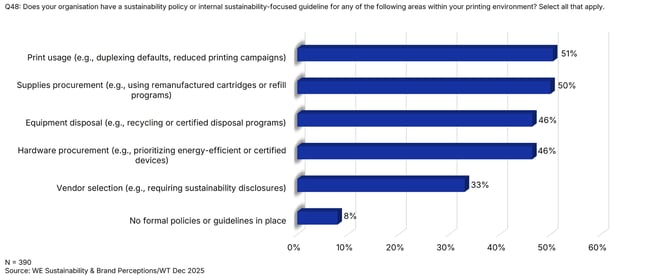
The research also shows that organizations are increasingly embedding sustainability policies into how they manage printing environments. Many businesses now have formal guidelines covering supplies procurement, equipment disposal, and hardware purchasing, with recycling and reuse programs often forming a key part of these policies. This trend reinforces that recycling is not just a marketing message, but a structural element of how companies evaluate technology vendors and manage their fleets.
The most recent study focuses on the customer journey through a sustainability lens. It looks at how companies of differing sizes approach sustainability, where it fits in the decision-making process, and what the perceptions for major brands as well as their sustainability efforts are. For OEMs and channel partners, Global Recycling Day is therefore more than an awareness event. It is an opportunity to highlight how recycling programs support real business objectives such as reducing waste, lowering operating costs, and helping organizations meet their sustainability targets.
As environmental expectations continue to rise, recycling will remain a critical component of sustainable technology ecosystems. Vendors that invest in robust recycling infrastructure and circular supply chains will reduce their environmental impact, but that’s just a start. They can also strengthen their value proposition to customers, who increasingly expect sustainability to be built into the products and services they rely on every day.
Stay ahead in the ever-evolving print industry by browsing our Report Store for the latest insights. Log in to the InfoCenter to view sustainability research through our Workplace- and Production-based Advisory Services. Not a subscriber? Contact us for more information.